 29 April 2026
 Share
Share
1

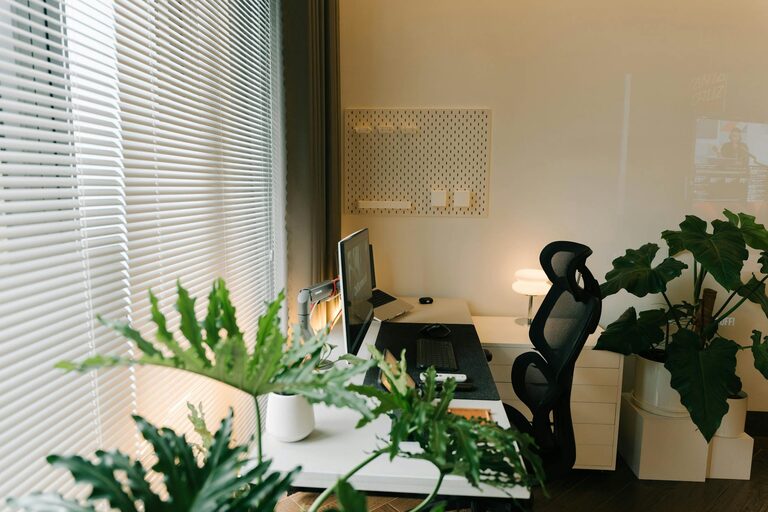
Creating a home office that is both cosy and productive can make a significant difference in how you work and feel throughout the day. Whether you have a dedicated room or just a corner to work from, thoughtful design and organisation can help you stay focused while feeling comfortable. This guide offers practical tips to help you set up an inviting workspace that supports your productivity and well-being.
Choosing the right spot for your home office is the first step. Ideally, pick a quiet area with minimal distractions. If possible, a separate room allows for better separation between work and home life.
Consider natural light: Position your desk near a window to benefit from daylight. Natural light helps reduce eye strain and can improve mood.
Minimise noise: If a quiet room isn’t an option, consider noise-cancelling headphones or white noise machines to block out distractions.
Comfort is key when you spend hours at your desk. Ergonomic furniture prevents discomfort and supports good posture.
– Desk: Choose a desk with enough surface area for your computer, documents, and other essentials. Adjustable desks that allow sitting and standing are a great option.
– Chair: Invest in an ergonomic chair with lumbar support and adjustable height. Sitting comfortably helps maintain focus and reduces physical strain.
– Storage: Incorporate shelves, filing cabinets, or organisers to keep your space tidy and clutter-free.
A workspace that feels welcoming can improve motivation and reduce stress.
– Colour scheme: Choose colours that make you feel calm and focused. Soft blues, greens, or neutral tones work well in most settings.
– Decor: Add personal touches such as photos, artwork, or plants. These elements create a more inviting atmosphere.
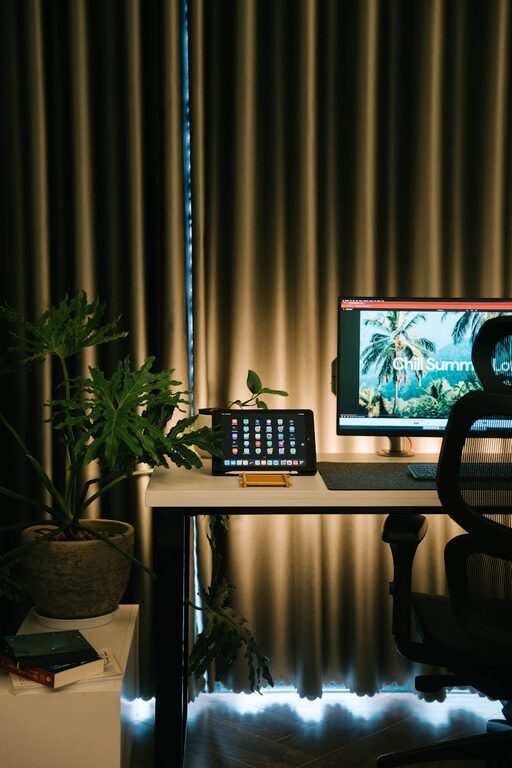
– Lighting: Besides natural light, use warm-toned lamps or desk lights to create cosy lighting during darker hours.
A cluttered workspace can hamper productivity. Effective organisation helps keep your mind clear and tasks manageable.
– Desk organisation: Use trays, pen holders, and file racks to keep daily essentials within reach but tidy.
– Digital organisation: Keep your computer desktop and files well organised to avoid unnecessary distractions.
– Regular cleanup: Set aside a few minutes at the end of each day to tidy your desk.
Creating clear boundaries between work and personal time is essential for maintaining balance.
– Dedicated work hours: Stick to specific start and finish times to help focus and avoid overworking.
– Break routines: Take regular breaks away from your desk to refresh your mind.
– Separate workspace: When possible, leave your workstation at the end of the day to mentally switch off from work mode.
Technology can help streamline workflow and enhance comfort.
– Cable management: Use clips or sleeves to keep cords organised and out of sight.
– Ergonomic accessories: Consider a keyboard and mouse designed to reduce strain.
– Productivity tools: Utilise apps for task management, focus timers, or note-taking to stay organised.
Small adjustments can greatly improve your comfort and overall work experience.
– Temperature control: Ensure your workspace is neither too hot nor too cold.
– Natural elements: Adding plants can improve air quality and add a sense of calm.
– Air quality: Use air purifiers or ensure good ventilation to keep the area fresh.
Your ideal home office may change over time as your work habits evolve. Regularly assess and tweak your space to maintain comfort and productivity.
– Experiment: Try different desk arrangements or lighting setups.
– Listen to your body: If you feel discomfort or fatigue, adjust furniture or take more breaks.
– Seek feedback: If you share the space, discuss any improvements with household members.
—
In conclusion, creating a cosy and productive home office is all about balancing comfort with functionality. By carefully selecting your location, investing in ergonomic furniture, personalising your space, keeping organised, and setting clear boundaries, you can craft a workspace that supports both your work goals and personal well-being. Small, consistent improvements will help you maintain a healthy and effective home working environment.