 29 April 2026
 Share
Share
1


Creating a home office environment that fosters productivity can make a significant difference to your work-from-home experience. Whether you work remotely full-time or occasionally need to complete tasks from home, setting up a space that supports focus and efficiency is essential. This guide offers practical tips to help you create an effective and comfortable home office.
The first step in creating a productive home office is selecting the best spot in your home.
– Quiet and Private: Look for a space away from high-traffic areas and household noise. A spare room or a quiet corner can work well.
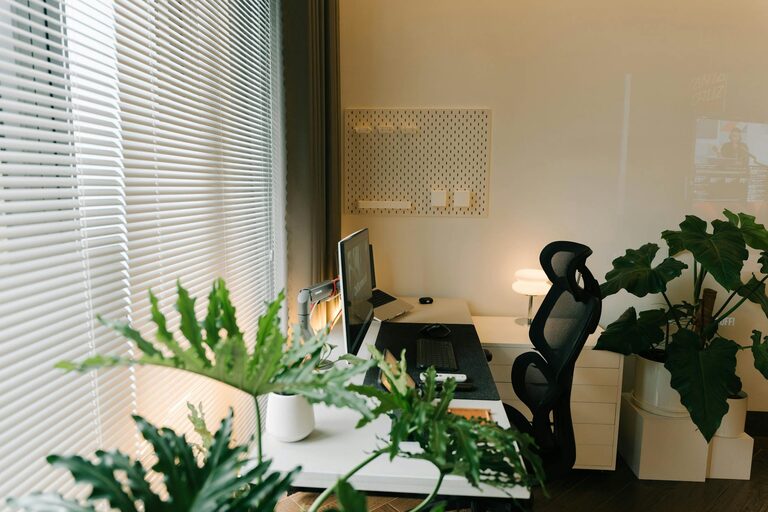
– Natural Light: Position your desk near a window if possible. Natural light helps improve mood and reduces eye strain.
– Space: Ensure your chosen area has enough room for your desk, chair, and any other work essentials.
Comfort plays a key role in productivity. Uncomfortable furniture can cause distractions and health issues.
– Desk and Chair: Choose a desk at the right height so your wrists rest comfortably while typing. An adjustable office chair with good lumbar support helps maintain good posture.
– Monitor Position: Place your computer screen at eye level, about an arm’s length away, to avoid neck and eye strain.
– Accessories: Consider accessories like footrests or ergonomic keyboards and mouse to reduce fatigue.
A tidy and clutter-free workspace helps maintain focus and efficiency.
– Declutter Regularly: Keep only the essentials on your desk to avoid distractions.
– Storage Solutions: Use shelves, drawers, or organisers to store documents and supplies neatly.
– Cable Management: Use clips or cable trays to keep wires organised and out of sight.
Proper lighting reduces eye strain and supports alertness.
– Natural Light: As mentioned, natural light is best during the day.
– Task Lighting: Use a desk lamp with adjustable brightness to illuminate work tasks directly.
– Avoid Glare: Position screens and lamps to minimise glare, which can cause discomfort and reduce concentration.
Home environments can be filled with distractions, so it’s important to manage them.
– Designate Work Hours: Setting clear work times helps household members respect your space and schedule.
– Use Noise-Cancelling Headphones: These can block out background noise and help you focus.
– Limit Non-Work Devices: Keep your phone on silent or in another room if possible to avoid social media interruptions.
Adding personal touches can make your home office more inviting and motivating.
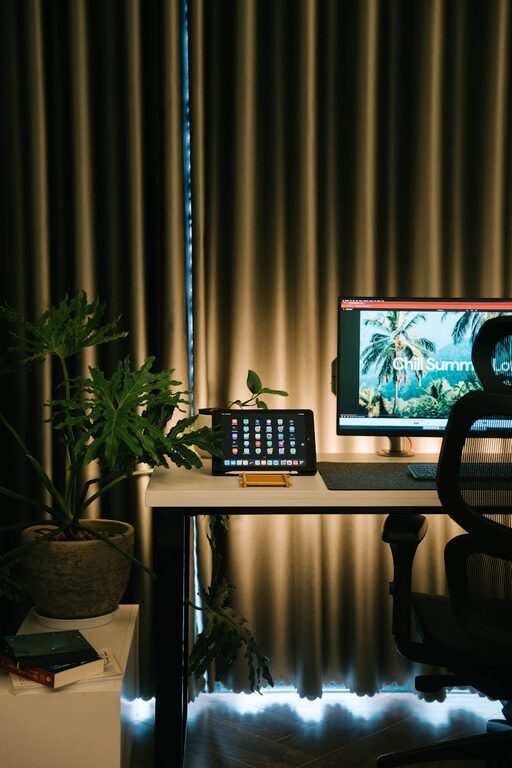
– Plants: Indoor plants improve air quality and bring a calming presence to your workspace.
– Artwork or Photos: Choose images that inspire or relax you without being too distracting.
– Colour Scheme: Use colours that support focus, such as blues and greens, or brighter hues if they energise you.
Consistency helps your mind switch into work mode.
– Set a Start Time: Begin work at the same time each day.
– Breaks: Schedule short breaks to stand, stretch or refresh your mind.
– End of Day Ritual: Clear your desktop and plan for the following day to create a clear boundary between work and home life.
Make the most of technology to streamline your tasks.
– Reliable Internet: Ensure your internet connection can handle your workload smoothly.
– Organisational Tools: Use apps for task management, calendars, and note-taking to stay organised.
– Backup Solutions: Regularly back up important files to avoid losing work.
Your physical and mental wellbeing is crucial for sustained productivity.
– Regular Movement: Stand, stretch, or walk around at regular intervals.
– Hydration and Nutrition: Keep water and healthy snacks nearby.
– Ventilation: Fresh air improves concentration and reduces fatigue.
Setting up a productive home office environment is a balance of comfort, organisation, and minimal distractions. By carefully choosing your workspace, investing in ergonomic furniture, and establishing clear routines, you can create a professional and inviting space that supports your work goals every day. Adapt these tips to suit your unique needs and enjoy the benefits of a home office that truly works for you.